
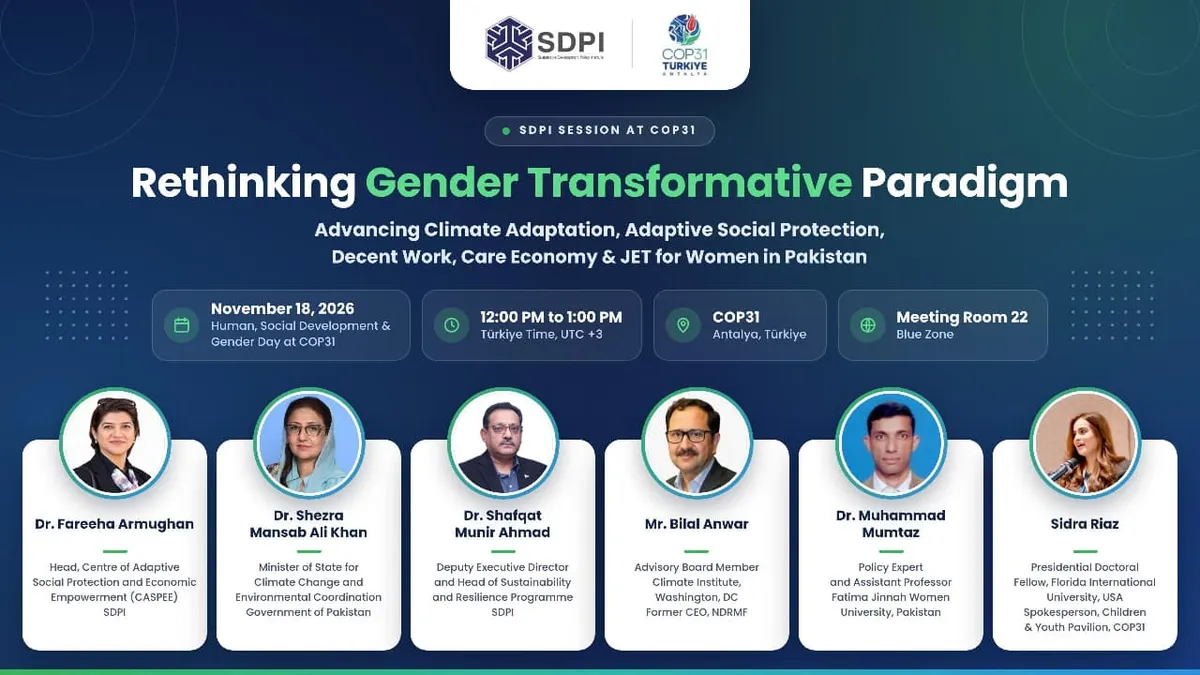
Rethinking Gender Transformative Paradigm
Advancing Climate Adaptation, Adaptive Social Protection, Decent Work, Care Economy and JET for Women in Pakistan
- Date
- Wednesday 18 November 2026
- Time
- 12:00–13:00 Antalya (UTC+3)
- Where
- Meeting Room 22, Blue Zone
- Organised by
- Sustainable Development Policy Institute (SDPI)
- Bilal’s role
- Speaker
A climate disaster destroys livelihoods and infrastructure, and it also reveals how power is distributed: who absorbs the costs and who decides what recovery looks like. At SDPI’s session, Bilal argued that climate change deepens gender inequalities already entrenched in Pakistani society.
Three shifts he proposed
- Give women formal decision-making power. Women from affected communities should have a mandate to set local adaptation priorities, shape recovery plans and decide how public funds are spent.
- Remove institutional barriers to recovery. Design disaster assistance and social protection so women can get support in their own right, including when land titles or household records are in someone else’s name.
- Recognise care as part of the economics of adaptation. Measure how disasters redistribute unpaid work, and fund services such as childcare, safe water and accessible healthcare that give women more control over their time.
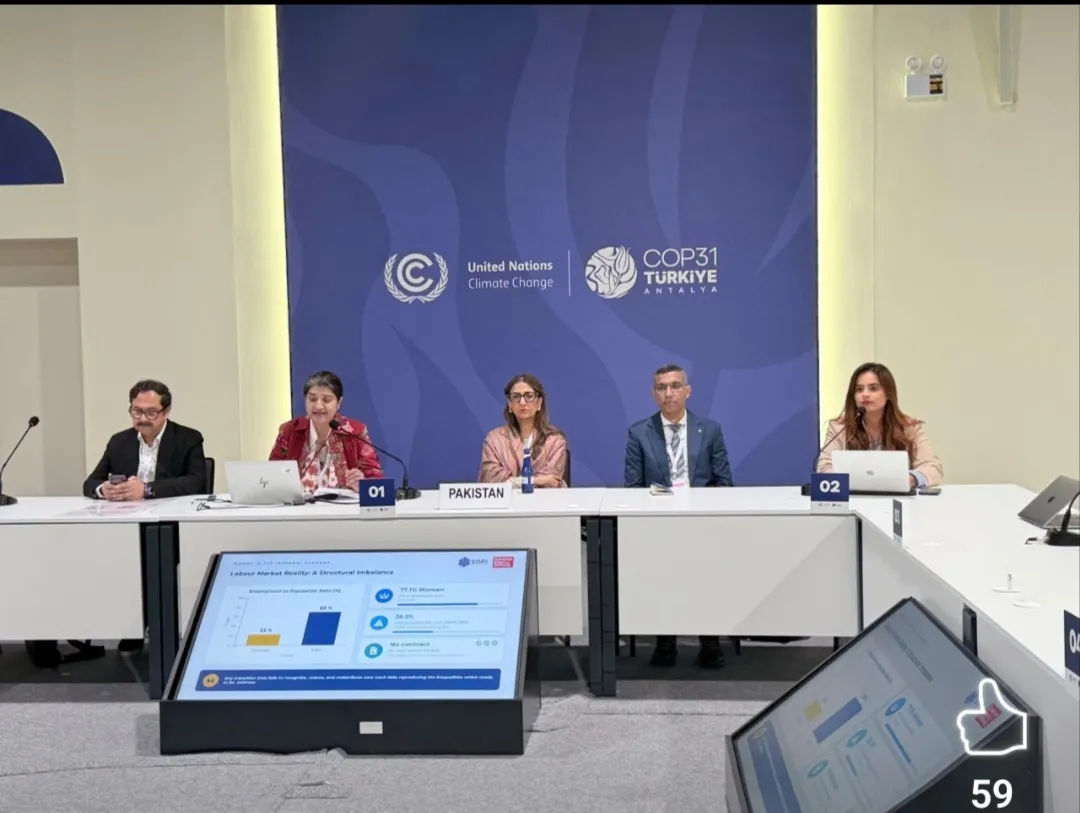
If recovery restores the same distribution of power that produced vulnerability in the first place, it carries that vulnerability into the next disaster.
Photos
More from COP31
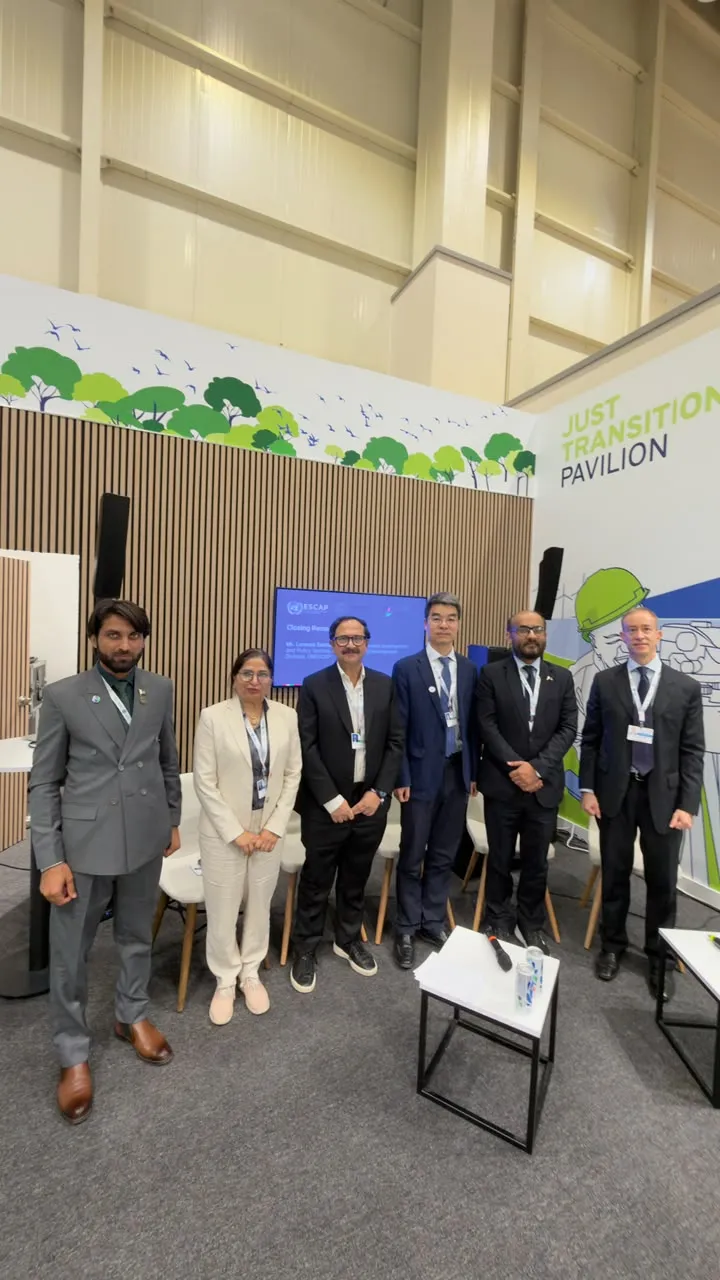 Wed 18 NovScaling Up Just Transition: A Synergistic Approach to Achieving Climate and Development Goals
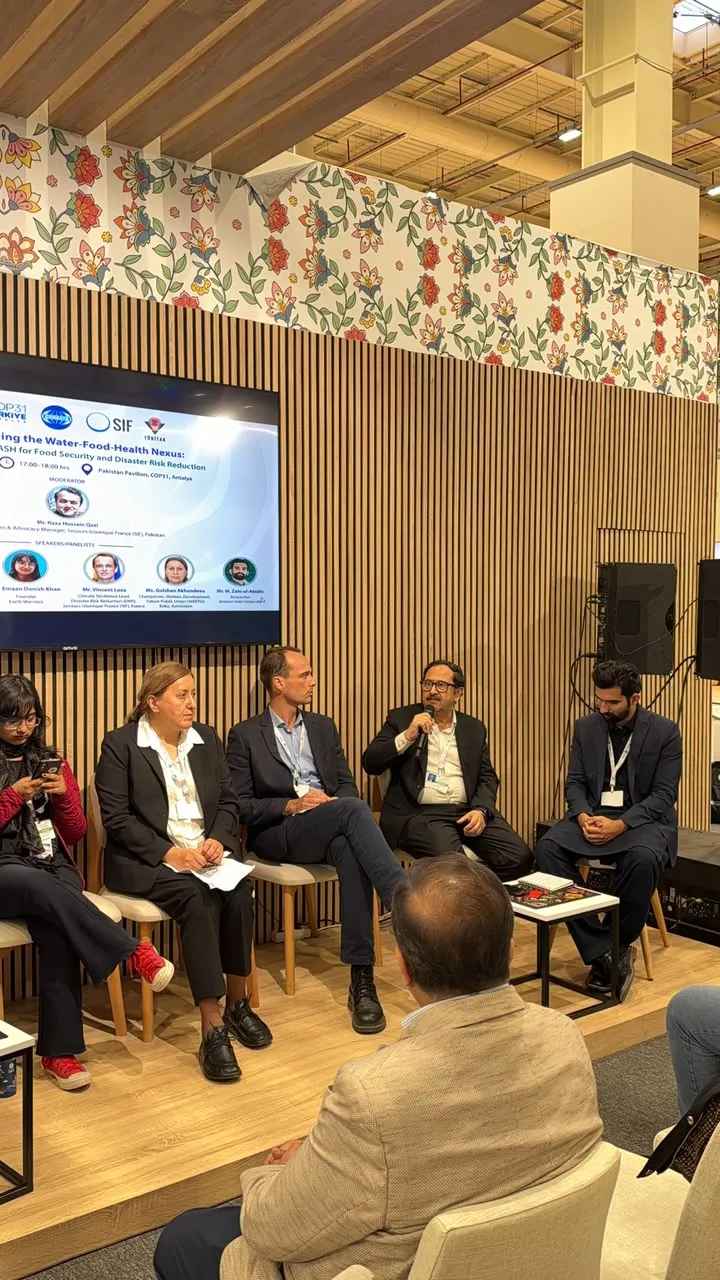 Wed 18 NovStrengthening the Water-Food-Health Nexus: Climate-Resilient WASH for Food Security and Disaster Risk Reduction
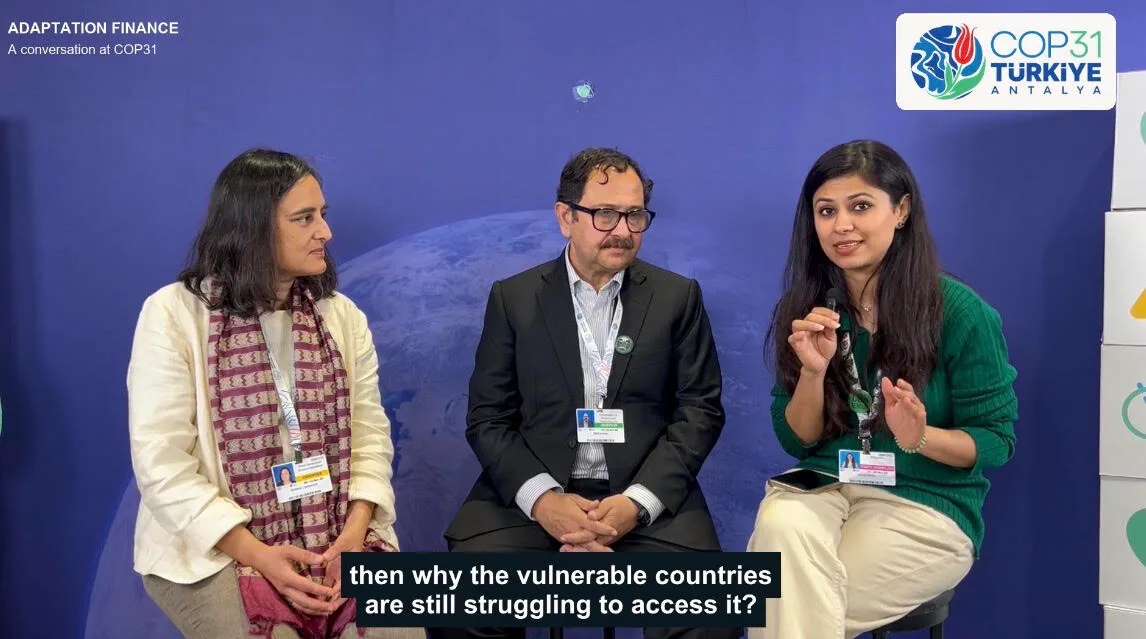 PodcastThe Climate Finance Trap, with Seleha Lockwood
 TelevisionPakistan TV, The Perspective: COP31 at a Crossroads