About Bilal Anwar
A journey shaped by global experiences, deep partnerships and a commitment to building a more resilient and equitable world.
NDRMF Pakistan
Built Pakistan's climate and disaster resilience architecture through financing innovation, risk intelligence and institutional transformation.
Led Pakistan's government-owned sovereign financial institution dedicated to climate resilience. Directed disaster-risk financing strategy, governance structures and operations protecting the country's most climate-vulnerable communities — positioning NDRMF as a model institution for disaster-risk finance across the developing world.
International Climate Diplomacy
Multilateral negotiation across UNFCCC, COP and CMP processes.
Two decades at the table taught me that trust, patiently built, moves more than any single clause.
My experiences have led me to understand international climate diplomacy in building collective global ambition and action in addressing climate action. This includes development of global climate and carbon finance architecture under the UNFCCC, supporting intergovernmental negotiations and regulatory systems that enabled participation of developing countries in climate markets and advancing institutional mechanisms that positioned climate finance as an instrument for development transformation rather than environmental assistance alone.
Over two decades, this engagement evolved from supporting multilateral governance processes to leading implementation-oriented institutions that connected international commitments with national delivery. Through establishing and operationalizing climate finance platforms across Asia, Africa, and Small Island Developing States, supporting countries in accessing international climate finance, strengthening institutional readiness and building investment-ready climate programs and portfolios.
My experiences evolved to an understanding of international climate diplomacy as the strategic discipline of building consensus, mobilizing finance, strengthening institutions and converting global climate ambition into implementable and financeable action at scale.
Climate Governance
Designing and reforming the public institutions that govern climate action.
The institutions we build outlast every negotiation. Getting their foundations right is the work I care about most.
My professional journey has been centered on leading and bridging international climate policy with implementation at scale. Having been involved in shaping international policies, processes and institutions to deliver climate outcomes in the evolution of global climate policy, climate finance and carbon market architecture under the UNFCCC process and assisting countries and corporate sector in building the national climate governance systems. The success of the Commonwealth Climate Finance Access Hub and its support structures in 15 countries in establishing and strengthening national institutions for climate action and to unlock climate finance and advancing national systems for climate resilience, disaster risk financing and investment-ready climate action is a practical demonstration of translating international mechanisms to national implementation.
My experience reflects climate governance not as an abstract policy concept but as the practical discipline of building institutions, mobilizing finance, enabling cooperation, and translating global commitments into measurable development outcomes.
Climate Finance
Unlocking and deploying international climate finance where it is needed most.
Money pledged in a hall means little until it reaches the people it was promised to. Closing that distance is the fight.
Climate finance is the strategic design, mobilization, and deployment of financial capital to achieve long-term climate resilience, economic sustainability, and inclusive development outcomes. It integrates environmental, social, governance, and risk considerations into financial systems so that investment decisions not only generate returns but also strengthen institutional resilience, reduce vulnerabilities, and accelerate sustainable transformation.
From the perspective of my professional experience, climate finance extends beyond investment screening. It is about creating the institutional and financial architecture that enables countries to convert climate ambition into implementable and financeable action. My work has focused on building mechanisms that connect global capital with national priorities and local impact.
At the national level, my work has focused on advancing climate finance as a tool for climate resilience and fiscal transformation. It involved setting up the institutional and operational infrastructure for the large scale finance mobilization. Leading Pakistan's first National Disaster Risk Financing Strategy, developing innovative financing instruments including climate and disaster risk insurance, contingency financing, reserve mechanisms and catastrophe financing approaches sets the stage for flow of climate finance to the country.
Carbon Markets
CDM accreditation and global MRV standards for carbon verification.
I helped write some of the first rules. I still believe markets can be honest — if the standards are.
Having played an instrumental role in designing and laying the foundation of global carbon financing and carbon market architecture, I am pleased to see carbon markets evolved become effective instruments for climate mitigation action, technological innovation and create economic value for reducing emissions.
Advent and evolution of global carbon markets have been a defining area of my engagement at both the conceptual and operational levels. At the UNFCCC Secretariat, where I contributed to the development of the foundational architecture of international climate and carbon finance by contributing to the development of regulatory standards, procedural systems, governance arrangements, accreditation processes, and operational frameworks that enabled carbon finance to emerge as an instrument for mobilizing private capital into climate solutions while ensuring participation of developing countries.
This experience has shaped an understanding of global carbon markets as the strategic intersection of international climate diplomacy, financial innovation, institutional governance and investment mobilization for developing countries.
Global carbon markets are internationally governed systems that use market mechanisms to channel investment toward emissions reductions and climate resilience by assigning economic value to verified climate outcomes.
Strategic Institutional Leadership
Building and transforming institutions to deliver on climate and development mandates.
Strategy without institutional courage is just a document. I have spent my career trying to close that gap.
My professional journey is packed with experiences and exposures for creating and repositioning institutions at the intersection of global governance, climate finance, resilience, and sustainable development. This includes contributing to the institutional foundations of international climate finance and carbon market systems under the UNFCCC, operationalizing the Commonwealth Climate Finance Access Hub for unlocking the flow of climate finance for developing countries and strategically aligning the largest national fund (NDRMF) in Pakistan and build it to be ready for emerging threats and challenges. These are the demonstrated illustrations of strategic institutional leadership at international and national levels.
These experiences allowed me to learn and sharpen my understanding to envision, design, transform, and lead institutions so they can respond effectively to complex and evolving global challenges while delivering long-term public value. It extends beyond organizational management by creating the strategic direction, governance systems, partnerships, financing mechanisms, and implementation capabilities necessary to translate ambition into measurable and sustained impact.
Strategic Institutional Leadership is the ability to design and lead institutions that translate ambition into action by integrating vision, governance, partnerships, and resources to deliver lasting systemic impact.
Climate Policy Entrepreneurship
Translating ideas into policy frameworks that endure beyond political cycles.
The best policies are those that outlive the people who wrote them. That is the standard I hold myself to.
From the perspective of my professional journey, climate policy entrepreneurship has been defined by operating at the intersection of international climate diplomacy, institutional leadership, climate finance, and implementation at scale. This has included contributing to the creation of global climate and carbon finance frameworks under the UNFCCC, helping shape enabling rules and mechanisms that connected climate objectives with financial incentives and broadened participation of developing countries in international climate action.
This entrepreneurial approach later evolved into creating and operationalizing new institutional models that expanded climate action beyond negotiation spaces. Through establishing the Commonwealth Climate Finance Access Hub, the focus shifted toward unlocking climate finance, strengthening national governance systems and enabling vulnerable countries to move from climate commitments to bankable investment pipelines and implementation capacity. Similarly, at the national level in the specific context of Pakistan, climate policy entrepreneurship demanded introducing new policy and financing approaches redefining how climate and disaster risks are managed. I led the development of Pakistan's National Disaster Risk Financing Strategy, pioneering innovative climate and disaster financing instruments, advancing catastrophe risk solutions, establishing analytical and institutional capabilities such as NatCat, and positioning climate resilience as a strategic economic and investment agenda rather than a purely environmental concern.
Climate policy entrepreneurship is the ability to originate and scale climate solutions by connecting policy innovation, institutional leadership, strategic partnerships and finance to drive systemic change.
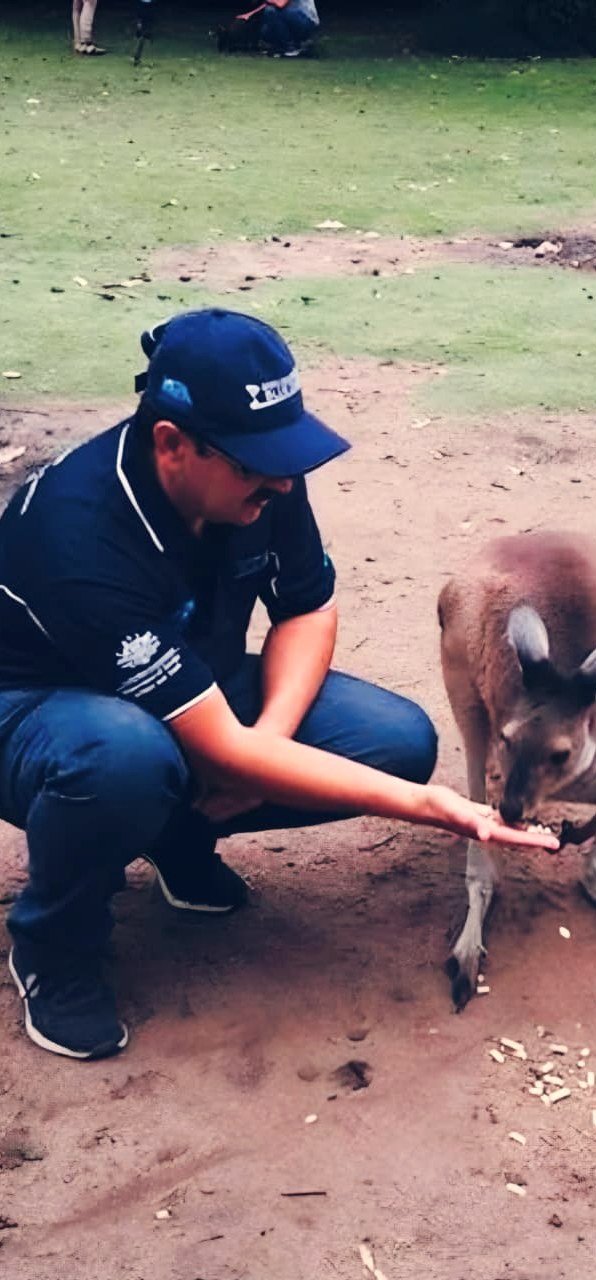
A meaningful life journey is measured not by the positions held but by how deeply it enriches us and inspires us to make a difference.
A Life Lived Through a Changing Climate
Reflections on a life shaped by questions of poverty, risk, resilience and the future
If someone had asked me in my University days in late 1990,s what issue or global challenge would define most of my professional life, I seriously doubt climate change would have been my answer!
Back then, I was intrigued by different questions: I recall to be desired in understanding how societies progress holistically? Having grown up in Pakistan, I was surrounded by social and economic challenges spread visibly across the society compelling to think why some societies remain poor and others prosper? Like many people of my generation, I also believed development was ultimately about growth, strengthening of institutions and expanding opportunities for communities.
Even within the vibrant and animated academic settings, climate change sat somewhere in the background. Echoes of its emerging significance were unmissable but yet not a central theme for the economic and social development thinkers and academicians.
However, this changed, at least for me, in year 2000, when I joined the United Nations Climate Change Programme in Bonn, Germany. At first, it felt like a highly specialized field. Interspersed between science, policy, law, engineering, economic development and international cooperation. Which it indeed is.
For the next two decades, my work took me across continents exposing me to the intensity of climatic and development challenges the communities were facing on daily basis. I walked with small farmers in their lands in Africa, shocked on why the rains have swung their settled routine? Or why the heat from the sun is becoming agonizing year after year. Menacing their centuries old cropping practices. I spent days and evenings with intensely worried communities of many small islands in Asia, Caribbean and in remote corners of the Pacific. Patches of their agriculture land were stripped away by the rising seas. Losing their livelihoods and their identity. Because, for them ocean is not merely a geographical boundary but part of their identity and survival. I met with worried public officials trying to balance impossible choices for their people. And communities rebuilding after repeated disasters and calamities.
Every jiffy of these experiences and exposures are truly memorable. But some specific incidents remain unforgettable.
In February 2018, as part of the Commonwealth Secretariat climate change team, I rushed to Tonga soon after devastating Cyclone Gita had ripped apart this small island nation in the Pacific. Destruction was still spread across. Trees were down. Electricity poles laid collapsed. And rooftops from poorer homes had been ripped away. What struck me most was not destruction itself, but what happened afterwards. People were already cleaning up the roads, salvaging their belongings to restore their daily lives.
Another awestruck memory is from Nauru Island. Once again a remote Pacific Island nation of just over ten thousand people. Small number of people facing the gigantic challenge of their survival. Surreal as it may feel. An entire country confronted with the question of existence because the coast lines were fast erasing the land where families and communities had built their lives for thousands of years. They were being dispossessed from their generational claim of the land wondering what have they done wrong? Nothing. Plausibly, climate change for Nauru people was not an issue for negotiations or debates. It was essentially about land, food, water and what future generations might inherit.
In a stark contrast but ironically coinciding, another part of my life was unfolding in a very different setting. Inside international conference arenas, negotiation halls of UNFCCC COP meetings and at flurry of international climate gatherings. For two decades, I watched international climate diplomacy closely. And played a fair role in fixing the negotiating language, debating targets, calling on financing promises and alluding to the emerging faith on technological advancements as the promising panacea for these inter-connected challenges.
Naively, I also believed that The Process Matters. Post second world war invention of ‘Multilateralism’ was concocted to miraculously balance the competing interests of nations. Set the accountability in motion and figure out a perfect framework to reconcile the developmental aspirations of nations in accord with the nature. Without losing faith on human ingenuity and wisdom of collective action, I struggled making sense of how to address the outrageously overlooked disconnect between negotiation rooms aspirations with the life intimidating challenges of people and communities on the ground? How the discussions measured in text, timelines and procedural victories matters to a family rebuilding after a storm, a farmer forced to abandon a cropping season or an island nation worrying its future?
I found the disconnect difficult to bridge demanding more intellectual experimentation and soul searching which I believe I am passing through right now!
Year 2022 brought a turning point to my professional and personal journey. I was handed over the task of leading the institution to address the risks for disasters and climate adaptation. Tasked to lead the National Disaster Risk Management Fund, I was both excited and perplexed. May be more perplexed than excited. While still grasping the intricacies of institutional dynamics and intensity of ensuing climate and disaster realities of the country – flood 2022 swept the one third of the country. First hand revelation of the devastation and incapacities of institutions to deal with these challenges brought many of the unanswered questions into much sharper focus.
Reinforcing the already well sprouted understanding that disasters do not begin with a flood, a storm, or a heatwave. But much earlier. In the places left unprotected, when compromises are made on the name of growth and development. In the inaudibility of vulnerabilities to accumulate over time. What ultimately become a disaster is often the moment when these fractures become impossible to ignore. My painful and biggest takeaway from flood 2022 in Pakistan.
Looking back now, I realize my own intellectual journey had taken a fundamental shift: I landed into this area with a pinch of hesitation and skeptical mind-set but stayed because climate change revealed itself to be something much larger. Today, it has grown even more larger. Much apparent and much critical. I see climate change fundamentally a development issue, a governance issue and ultimately a question of collective responsibility. Not simply a problem to be managed. But a test of our political imagination, institutional courage and our willingness to build a future that do not leave others to carry the cost.
This space is part of this continuing search. A place to think, write and ask difficult questions about climate, development, governance, risk, culture and humanity. And the kind of future we still have time to create.