Field Note
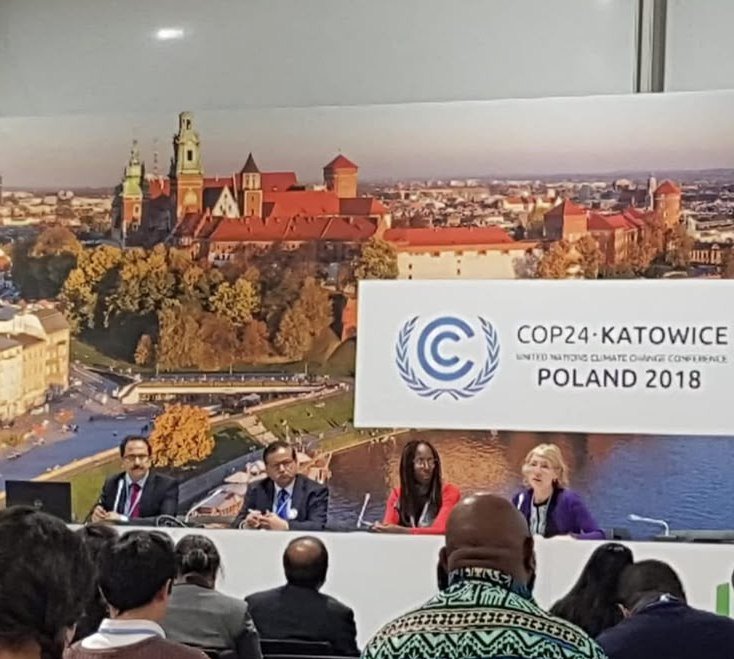
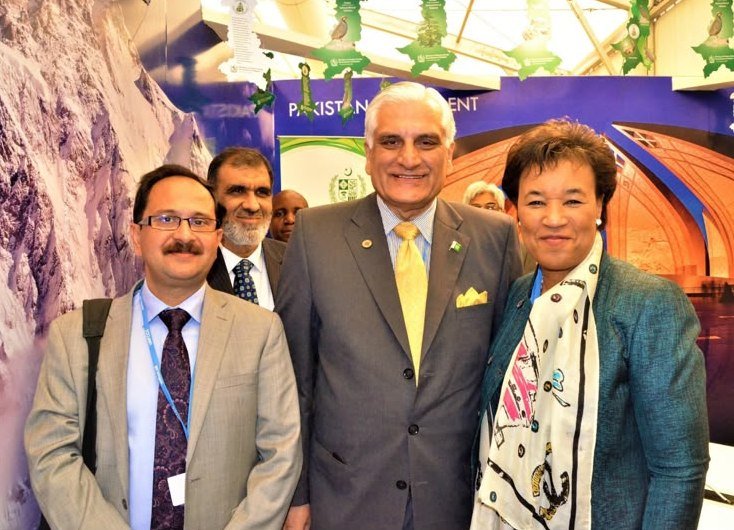
For more than two decades, the annual Conference of the Parties (COP) under the United Nations Framework Convention on Climate Change (UNFCCC) has been a recurring chapter of my professional life. I had the rather rare privilege of experiencing it from three distinct perspectives: first as a technical officer at the UNFCCC Secretariat, later as a member of Pakistan's negotiating delegation and subsequently as an active observer representing international organizations working alongside climate-vulnerable countries.
Looking back, I am realizing that I was not simply witnessing the evolution of global climate diplomacy. I was evolving with it.
I joined the UNFCCC Secretariat in Bonn in the early 2000s filled with optimism and conviction to address the greatest challenge of humanity. It was a time when Kyoto Protocol was beginning to take shape as a functioning international treaty. Those were exciting years. Much of my work focused on helping build the institutional foundations of the Clean Development Mechanism (CDM) establishing the institutional and regulatory infrastructure of world's first global carbon market. Back then, the idea seemed almost revolutionary. And it indeed was ground breaking. Building on the principal, that if emissions reductions could be assigned an economic value, markets could mobilize private investments at a scale that public finance alone could never achieve. But it required an entire methodological and regulatory system to be established. Over the years, we developed methodologies, accreditation system, governance arrangements and technical standards and regulatory procedures. Driven by the believe that we were building an entirely new architecture for international climate cooperation facilitating the private sector engagement.
Those early years truly taught me the power and intricacies of multilateralism.
It was intriguing to see that countries with very different interests were able to intensely deliberate and agree on set of common rules. Scientists, economists, lawyers and policymakers collaborating to create institutions that had never existed before. It gave me confidence that international cooperation, no matter how difficult, could solve problems that no nation could solve on their own.
With the passing years, I kept coming back to COPs in different capacities — wearing different color COP badges. Turning my understanding less optimistic and more nuanced.
The first lesson I learned was that COPs are not gatherings of humanity. They are congregations of sovereign states. Well, to many this distinction may appear obvious but it fundamentally shapes every discussion and stance during the negotiations. Delegates do not enter negotiating rooms as representatives of humanity's collective future. They arrive carrying national mandates, political constraints, economic interests and domestic priorities. Every position around the table reflects a careful balance between what is globally desirable and what is nationally possible. The issue of climate change may be global in nature but climate politics remain profoundly domestic and politically motivated.
Watching negotiations and having been exposed to latest scientific findings from the IPCC reports revealed how scientific urgency repeatedly collided with political reality. The science was compellingly dictating what must be done. Politics determined what governments were willing to do.
Perhaps no experience illustrated this more vividly than returning to the COP process as a member of Pakistan's delegation following the devastating floods of 2022.
Only weeks earlier, one-third of my country had been submerged. Millions of people had lost their homes, livelihoods and futures. The destruction was almost beyond comprehension. Entire communities had disappeared beneath floodwaters, infrastructure had collapsed, and the country's development gains had been pushed back by years.
Walking into the negotiating halls after witnessing that devastation felt profoundly different from my earlier COP experiences.
The discussions about adaptation finance, resilience and loss and damage were no longer abstract policy concepts and targets to be negotiated. There was an intense and real human value weaved in the process. Every paragraph of negotiated texts represented real consequences for countries struggling to recover from disasters they had done little to cause.
For the first time, I experienced climate diplomacy not only as a technical process but also as a deeply human one.
Representing Pakistan during that period reinforced another important lesson. Countries do not arrive at COPs as equals.
While every nation formally has one seat at the table, their capacities, negotiating resources, financial influence and geopolitical leverage differ enormously. For many developing countries, the challenge is not simply securing stronger global ambition but ensuring that the international system recognizes their realities, supports adaptation and delivers finance and assistance at the scale promised. And over the period, I see international community falling short of their commitment frequently.
This is why debates over climate finance, loss and damage and technology transfer have always been about way beyond money. They are debates about trust, equity and shared responsibility.
Another lesson emerged outside the negotiating rooms.
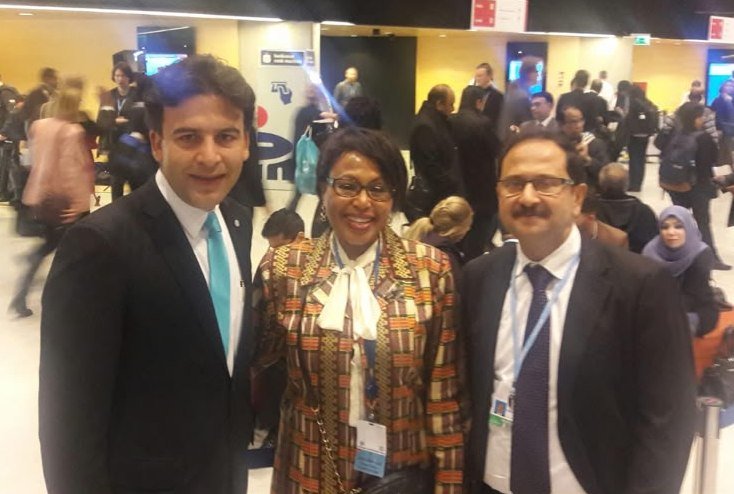
Some of the most valuable conversations I have had during COPs never appeared in official reports. But over coffee with negotiators from small island states, during side events discussing innovative technologies or in conversations with practitioners working in communities confronting climate impacts every day. Those informal exchanges broadened my understanding far beyond negotiating texts and long speeches by the delegates. I got introduced me new ideas, my long-held and well cultivated assumptions were challenged and created friendships and professional relationships that have endured for years. COPs are among the few places where ministers, scientists, business leaders, indigenous communities, young activists and development practitioners occupy the same ecosystem, exchanging ideas that often shape future policy long before they appear in formal decisions.
As my career increasingly took me beyond conference centres and into communities recovering from cyclones, floods and droughts, another realization gradually emerged.
The distance between negotiation rooms and lived reality can sometimes feel enormous.
I have met families in Tonga rebuilding after Cyclone Gita, communities across Commonwealth countries adapting to rising seas and prolonged droughts, and flood-affected households in Pakistan trying to rebuild lives after losing everything. Returning to climate negotiations after those experiences often felt unsettling. The language of diplomacy remained sophisticated, but I found myself constantly asking a simple question: how will this discussion change the lives of the people I have just met?
That question has stayed with me ever since.
Over time, I also came to appreciate that we often expect COPs to achieve things they were never designed to deliver. COPs establish common rules, shared goals, reporting frameworks and political commitments. They were not meant to build flood protection infrastructure, reform energy systems or implement national climate policies. Those responsibilities lie with governments, financial institutions, businesses and societies themselves.
When implementation falls short, it is tempting to conclude that the COP process has failed. But the reality is more complicated. The COP process has succeeded in many ways and yes failed on some key and fundamental fronts. It succeeded in creating an unprecedented global framework for climate cooperation. It helped establish international carbon markets, global transparency systems, adaptation frameworks and having the almost global agreement of the Paris Agreement. It fundamentally changed the way governments, businesses and investors think about climate risk. Whereas, it has struggled is in translating collective ambition into collective action at the pace demanded by the science.
Looking back today, I no longer measure a successful COP solely by the number of decisions adopted or the wording of a negotiated text.
Instead, I value something different.
The COP process has given me an extraordinary education in how the world actually works. It has shown me both the possibilities and the limits of multilateralism. It has taught me that science alone does not shape policy, that national interests rarely disappear in the face of global crises, and that progress often comes through persistence rather than dramatic breakthroughs.
Most importantly, it has reminded me that climate diplomacy ultimately exists for people, not paragraphs. The true measure of any COP is not the length of its final decision or the applause that follows its adoption. It is whether communities become safer, whether economies become more resilient. And whether future generations inherit a more stable climate than the one we are leaving behind.
After more than twenty years, I remain convinced that the world needs the COP process. Despite all its imperfections, there is no credible alternative to bringing nations together to negotiate solutions to a shared global challenge. But I also believe that the next chapter of climate diplomacy must be defined less by what happens inside conference halls and more by what happens after delegates return home.